Understanding Wood Destroying Insect Inspections for Punta Gorda Properties
About
Wood-damaging insects can affect parts of a property that are difficult to notice during an ordinary walkthrough. Because some activity occurs inside wood, crawl spaces, wall areas, or other less accessible locations, visible signs may not always provide a complete picture. Understanding the purpose of a specialized inspection can help property owners recognize potential concerns and decide when further evaluation may be useful.
Insects and other organisms that affect wood can cause different types of damage depending on the species and conditions of the property. Moisture, untreated wood, soil contact, structural openings, and other environmental factors can influence the likelihood of activity. Regular attention to the property's condition can help identify signs before damage becomes more extensive.
Understanding Wood-Damaging Insect Concerns
When arranging Wood Destroying Insect Inspections Punta Gorda FL, property owners can obtain information about visible evidence of wood-destroying insect activity and conditions within the applicable inspection scope. The inspection may focus on areas such as accessible structural wood, crawl spaces, exterior components, and other locations where signs of activity may be present.
The exact scope can vary depending on the property, inspection requirements, accessibility, and type of suspected activity.
Recognizing Common Warning Signs
Wood-destroying insect activity can produce several visible clues. Property owners may notice damaged wood, small openings, discarded wings, mud tubes, frass, staining, or other unusual conditions around the structure.
These signs do not always identify the exact insect or establish the full extent of damage. A suitable inspection can provide additional information about the observed conditions and whether further evaluation may be necessary.
Understanding Termite Activity
Termites are among the insects commonly associated with damage to wood structures. Depending on the species and environment, they may enter through soil, cracks, construction joints, or other pathways.
Evidence can sometimes include mud tubes, damaged wood, discarded wings, or other signs. Because much termite activity can occur in concealed locations, visible inspection alone may not reveal every affected area.
Looking for Wood Damage
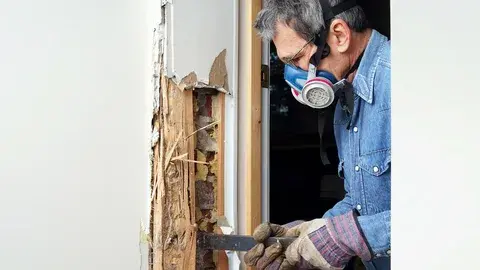
Wood-damaging organisms can affect structural and nonstructural components in different ways. Damaged wood may appear weakened, hollow, blistered, discolored, or otherwise different from surrounding materials.
However, changes in wood condition can have several possible causes. Moisture, aging, fungal activity, and physical damage can sometimes create similar appearances, making proper evaluation important.
Checking Moisture Conditions
Moisture can contribute to conditions that make wood more vulnerable to deterioration and certain forms of insect activity. Plumbing leaks, roof leaks, poor drainage, condensation, and standing water can all influence the environment around wood components.
Homeowners should pay attention to damp crawl spaces, wet soil near the foundation, damaged exterior materials, and areas where water repeatedly collects. Addressing moisture concerns can be an important part of broader property maintenance.
Examining Exterior Areas
The exterior of a property can provide useful clues about possible wood-destroying insect activity. Decks, fences, wooden trim, siding, porches, window frames, and other exposed wood components may show signs of damage or activity.
Inspectors may also consider areas where wood comes into contact with soil or where moisture can accumulate. These locations can be useful when reviewing conditions around the structure.
Reviewing Crawl Spaces and Accessible Areas
Crawl spaces can contain structural wood and other components that are important to examine. Access may allow an inspector to look for visible damage, moisture, insect evidence, or conditions that could contribute to future concerns.
Homeowners should make relevant areas accessible before an inspection when possible. Stored items and other obstacles can limit visibility and reduce the areas that can be evaluated.
Preparing for the Inspection
Before the inspection, homeowners can gather information about previous pest treatments, repairs, renovations, moisture problems, or known insect activity. This history may provide useful context during the evaluation.
It can also be helpful to identify locations where unusual signs have been noticed. Photographs, dates, and notes about recurring activity may help explain concerns that are not immediately visible during the inspection.
Understanding Inspection Limitations
A wood-destroying insect inspection does not necessarily expose every concealed area of a property. Finished walls, inaccessible crawl spaces, buried structural components, and other hidden areas may remain outside the inspection scope.
An inspection can document observable evidence and accessible conditions, but additional evaluation may be necessary when significant concerns are identified.
Reviewing Inspection Findings
After the inspection, property owners should review the findings and understand which areas were examined. If evidence of wood-destroying insect activity is identified, further evaluation may help determine the type and extent of the problem.
Repair or treatment decisions should be based on the conditions identified at the property rather than assumptions about the cause of visible damage.
Considering an Inspection During a Property Purchase
A wood-destroying insect inspection can provide useful information when purchasing a property, particularly when the home has accessible crawl spaces, older wood components, visible moisture concerns, or a history of pest activity.
Buyers can use inspection findings as part of their broader property evaluation and discuss significant concerns with appropriately qualified contractors or pest-control professionals.
Maintaining the Property After an Inspection
Preventive property care can help reduce conditions associated with wood-damaging insects. Keeping gutters and drainage systems maintained, addressing plumbing or roof leaks, reducing unnecessary moisture, and monitoring exposed wood can all support ongoing maintenance.
Homeowners should also keep records of previous inspections, treatments, repairs, and renovations. A clear property history can make future evaluations easier.
Taking a Practical Approach to Wood-Destroying Insects
Wood-destroying insect activity may not always be obvious from a property's appearance. Reviewing accessible wood components, moisture conditions, crawl spaces, exterior areas, and visible evidence can provide useful information about potential concerns.
If you are preparing for a wood-destroying insect inspection in Punta Gorda, gather previous pest and repair records and make relevant areas accessible. Contact a qualified inspection service to discuss your property, inspection scope, suspected activity, and any areas of concern.