What Makes an Online IQ Test Accurate
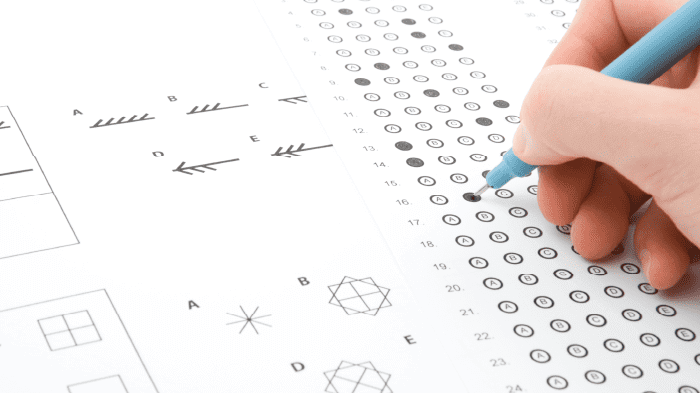
Online IQ tests have become a popular way to explore cognitive abilities from the comfort of home. With only a few minutes and an internet connection, people can answer questions involving logic, patterns, numbers, memory, and problem solving and receive an estimated IQ score. However, the convenience of online testing raises an important question: what actually makes an online IQ test accurate?
When people search for how accurate are online IQ tests, they often encounter conflicting opinions. Some websites claim their assessments can determine an exact IQ, while others treat online tests as simple entertainment. The truth is that accuracy depends on several important factors, including test design, standardization, reliability, validity, scoring methods, testing conditions, and the quality of the data used to establish norms.
An online IQ test can be useful when it is carefully designed and supported by sound measurement principles. At the same time, a visually impressive website or precise-looking score does not automatically make an assessment scientifically reliable.
Understanding what separates a credible online IQ test from a basic quiz can help you make better sense of your results.
What Does an IQ Test Measure?
An IQ test is designed to measure specific cognitive abilities. Depending on the assessment, these may include logical reasoning, verbal comprehension, working memory, processing speed, visual-spatial reasoning, and fluid problem solving.
The goal is not to measure every aspect of intelligence. Qualities such as creativity, emotional awareness, motivation, communication, practical judgment, and curiosity may not be fully represented by a traditional IQ score.
A scientifically developed assessment uses carefully selected tasks to measure particular cognitive skills. Researchers study how people respond to these tasks and use statistical methods to determine how scores should be interpreted.
This is important because simply calling an online quiz an "IQ test" does not prove that it accurately measures intelligence.
1. Strong Test Design
The first factor that contributes to accuracy is the quality of the test itself.
A good online IQ test should contain questions that are relevant to the cognitive abilities it claims to measure. Questions should be clear, appropriately challenging, and designed to distinguish between different levels of performance.
For example, a reasoning test may include questions involving sequences, relationships, classifications, and abstract patterns. A broader assessment may include different sections to evaluate multiple cognitive abilities.
Poorly designed questions can introduce problems. If an item is ambiguous, culturally unfamiliar, excessively dependent on specialized knowledge, or unnecessarily confusing, the result may reflect factors other than the intended cognitive ability.
Good test design therefore requires much more than creating a collection of difficult puzzles.
2. Scientific Validation
Validation is one of the most important characteristics of an accurate assessment.
A test should have evidence showing that it measures what it claims to measure. Developers need to examine how scores relate to established measures of cognitive ability and whether the test produces meaningful results.
A website that simply creates questions and assigns an IQ score has not necessarily created a valid intelligence assessment.
Scientific validation requires research. Developers need to collect data, analyze performance, examine relationships between scores, and determine whether the assessment performs as expected.
This is one of the biggest differences between a serious assessment and a recreational online quiz.
3. Reliability
Reliability refers to the consistency of a measurement.
An accurate online IQ test should produce reasonably stable results when circumstances are similar. Some variation is expected because human performance can change, but large unexplained differences may indicate problems with the test or testing conditions.
Researchers can evaluate reliability in several ways. They may examine whether people receive similar scores when tested at different times or whether different parts of an assessment provide consistent information.
Without evidence of reliability, an online IQ score should be treated cautiously.
A test might produce an impressive result, but if the score changes dramatically every time the assessment is completed, it may not be a dependable measure.
4. Appropriate Norms
An IQ score has meaning only when it can be interpreted against an appropriate reference population.
This is where norms become important.
Test developers collect data from groups of people and use that information to establish expected patterns of performance. An individual's score can then be interpreted relative to those norms.
A credible assessment should provide information about how its scoring system was developed and who was included in the reference group.
If an online test does not explain its norms, it is difficult to know whether a score such as 115 or 130 has the same meaning as it would on a standardized professional assessment.
A precise number without appropriate norms may create a false sense of accuracy.
5. Standardized Instructions
The way a test is administered can influence its results.
Professional assessments use standardized instructions so that each person receives the same information about how to complete the tasks.
Online tests can attempt to provide standardized instructions through written or recorded directions. However, users may still interpret instructions differently or ignore rules.
For example, one person may carefully follow a time limit while another may spend several minutes searching for an answer.
For an online test to be more accurate, the instructions should be clear, consistent, and easy to follow. The assessment should also make it difficult to manipulate the testing process.
6. Controlled Testing Conditions
Testing conditions can have a significant impact on performance.
A person taking an online IQ test might be sitting in a quiet room with no distractions. Another person might be completing the same test while tired, stressed, or surrounded by noise.
Sleep, concentration, anxiety, hunger, motivation, and distractions can all affect cognitive performance.
A truly accurate online assessment cannot completely control a user's environment, but it can minimize some problems through clear instructions and appropriate timing procedures.
Users can also improve the quality of their own results by taking the test when they are rested, focused, and unlikely to be interrupted.
7. Balanced Question Types
A good assessment should not rely too heavily on a single type of question.
For example, a test consisting entirely of visual pattern puzzles may provide information about pattern recognition but offer limited insight into other cognitive abilities.
A broader assessment may include different types of tasks. Depending on its purpose, it could evaluate verbal reasoning, numerical reasoning, visual-spatial skills, memory, and abstract problem solving.
The exact structure depends on what the assessment is designed to measure.
The important point is that a test should match its claims. If it claims to measure general intellectual ability, relying on one narrow skill may not be sufficient.
8. Appropriate Timing
Time limits can be an important component of cognitive testing, particularly when processing speed is being assessed.
However, timing must be carefully designed.
If the time limit is unnecessarily strict, the test may measure speed and stress tolerance more than the broader reasoning ability it claims to assess.
If there is no meaningful time control, users may spend excessive amounts of time solving individual questions, which can also affect the interpretation of results.
A credible assessment should explain why its time limits exist and apply them consistently.
9. Resistance to Practice Effects
Repeated exposure to similar questions can improve performance.
Suppose someone completes several online IQ tests that all use number sequences and visual patterns. After a while, that person may become familiar with the typical strategies used to solve these problems.
Their score may improve even if their underlying cognitive ability has not changed.
A stronger assessment considers practice effects and avoids relying excessively on questions that users can easily encounter elsewhere.
This is another reason why repeatedly taking random online IQ tests and averaging the scores is not necessarily a reliable way to determine intelligence.
10. Transparent Scoring
A credible online IQ test should explain how scores are calculated.
Users should be able to understand, at least generally, how their performance is converted into a score and what that score represents.
Transparency is particularly important when a website presents a very specific number.
For example, telling someone they have an IQ of 127 implies a degree of measurement precision. The website should therefore have evidence supporting the scoring system behind that number.
If the scoring method is hidden and there is no research available, the result deserves skepticism.
11. Appropriate Interpretation
Even a high-quality IQ test can be misunderstood.
An IQ score is not a complete definition of intelligence or human potential. It represents performance on particular cognitive tasks under particular conditions.
An accurate assessment should therefore provide appropriate context around its results.
Users should understand that their score is an estimate with limitations. A responsible assessment should not claim that a single number can predict every aspect of a person's future academic, professional, or personal success.
Good interpretation is part of good testing.
Online IQ Tests and Professional Assessments
The strongest online IQ tests may borrow principles from professional cognitive assessments, but this does not necessarily make them equivalent.
Professional assessments are typically administered by qualified professionals under standardized conditions. The examiner can explain instructions, monitor the testing process, and interpret the results in context.
Professional assessments also undergo extensive research and standardization.
Online tests may offer greater accessibility and convenience, but they generally have less control over the testing environment.
For casual curiosity, this distinction may not matter much. If an assessment is being used for an important educational or psychological purpose, however, professional testing is usually more appropriate.
How Accurate Are Online IQ Tests?
So, how accurate are online iq tests
There is no single answer because online IQ tests differ dramatically in quality.
A well-designed assessment with strong reliability, validity, appropriate norms, clear instructions, balanced questions, and transparent scoring can provide useful information about cognitive performance.
A poorly designed quiz without scientific validation may produce a number that has little meaningful interpretation.
This means you should not judge an online IQ test solely by its appearance, popularity, or the speed with which it generates a result.
The evidence behind the assessment matters far more.
How to Evaluate an Online IQ Test
Before trusting an online IQ score, ask a few basic questions.
Does the website explain who developed the test? Does it provide information about research or validation? Are reliability and scoring methods discussed? Does it explain how its norms were established?
Also consider what the test claims to measure. If it focuses exclusively on one type of puzzle, be cautious about interpreting the result as a complete IQ score.
Look for transparency rather than exaggerated promises.
A website that openly explains the limitations of its assessment may be more trustworthy than one that claims to provide an exact measure of intelligence without supporting evidence.
Final Thoughts
An accurate online IQ test requires much more than a collection of challenging questions. It needs thoughtful test design, scientific validation, reliability, appropriate norms, standardized instructions, suitable timing, transparent scoring, and careful interpretation.
The question of how accurate are online IQ tests therefore depends on the quality of the individual assessment rather than the fact that it is online.
Some online tests can provide a useful estimate of particular cognitive abilities. Others are best treated as entertainment.
If you are taking an online IQ test out of curiosity, enjoy the experience and use the result as a general indication of your performance. If you need a formal assessment for educational or psychological purposes, a professionally developed and administered test is generally the more dependable option.
Ultimately, an IQ score should be viewed as information, not a definition of who you are. A number can describe performance on certain cognitive tasks, but it cannot capture every aspect of intelligence, creativity, learning, adaptability, or human potential.