Why Every Healthcare Practice in the USA Needs a Mental Health Billing Specialist for Sustainable Revenue Growth
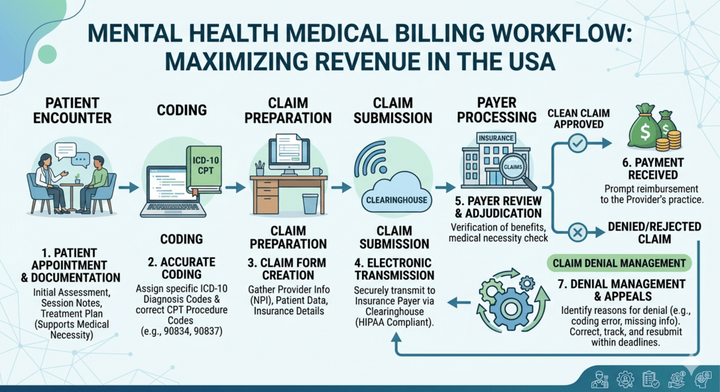
Mental health services are more essential today than ever before. Across the USA, therapists, psychologists, psychiatrists, counselors, and behavioral health providers are experiencing a growing demand for care. While this increased demand creates opportunities for practice growth, it also introduces significant administrative challenges—especially when it comes to insurance claims, reimbursements, and compliance.
One of the most overlooked factors affecting a mental health practice's financial health is billing accuracy. Mental health billing differs significantly from other medical specialties, requiring specialized knowledge of payer rules, therapy codes, authorization requirements, and documentation standards. This is where a mental health billing specialist becomes a valuable asset.
Whether you operate a solo therapy practice or a multi-provider behavioral health organization, understanding how professional billing support impacts revenue can help you improve collections, reduce claim denials, and focus more on patient care.
Understanding the Role of a Mental Health Billing Specialist
A mental health billing specialist is a professional who manages the unique billing requirements associated with behavioral and mental health services. Their responsibilities extend beyond simply submitting claims.
They typically handle:
- Insurance verification
- Prior authorization management
- Claim submission and tracking
- Payment posting
- Denial management
- Appeals processing
- Compliance monitoring
- Revenue reporting
Unlike general billing professionals, these specialists understand therapy-specific coding, payer policies, and behavioral health regulations that directly impact reimbursement.
Why Mental Health Billing Is More Complex Than Traditional Medical Billing
Mental health providers often face billing challenges that differ from other healthcare specialties.
Unique Coding Requirements
Mental health claims rely heavily on CPT and diagnosis codes that vary based on:
- Session duration
- Type of therapy
- Group versus individual treatment
- Telehealth services
- Psychiatric evaluations
Errors in coding can result in claim denials, delayed payments, or audits.
Frequent Policy Changes
Insurance companies regularly update behavioral health coverage requirements. Providers must stay informed about:
- Authorization requirements
- Telehealth billing rules
- Documentation standards
- Reimbursement schedules
Without proper expertise, practices can lose substantial revenue.
Complex Documentation Standards
Mental health documentation must support medical necessity while maintaining patient confidentiality and compliance standards.
A dedicated mental health billing specialist helps ensure that documentation aligns with payer expectations before claims are submitted.
Common Challenges in Billing for Mental Health Therapists
Many providers underestimate the complexity of billing for mental health therapists until reimbursement issues begin affecting cash flow.
Some common obstacles include:
Insurance Verification Errors
Incorrect eligibility verification can lead to denied claims and unexpected patient balances.
Authorization Issues
Certain therapy services require pre-authorization. Missing approvals can result in non-payment even when services are medically necessary.
Claim Rejections
Simple mistakes such as incorrect modifiers, diagnosis mismatches, or coding errors frequently cause claim rejections.
Slow Reimbursement Cycles
Behavioral health providers often experience longer reimbursement timelines compared to other specialties.
These challenges highlight why specialized billing support is becoming increasingly important.
How Medical Billing for Mental Health Services Improves Revenue
Professional medical billing for mental health services helps practices optimize reimbursement while reducing administrative burdens.
Faster Claim Processing
Experienced billing teams submit clean claims the first time, reducing rejections and accelerating payment timelines.
Lower Denial Rates
Specialists identify potential claim issues before submission, helping practices avoid costly denials.
Improved Patient Satisfaction
Accurate billing reduces confusion regarding insurance benefits and patient responsibilities.
Better Financial Visibility
Providers gain access to reports that help them monitor:
- Collections
- Outstanding claims
- Revenue trends
- Payer performance
This visibility supports informed business decisions.
The Growing Demand for Outsourcing Mental Health Billing
Many behavioral health practices are turning toward outsourcing mental health billing as a strategic solution.
Instead of hiring and training in-house staff, outsourcing allows providers to access experienced professionals who specialize in behavioral health reimbursement.
Benefits include:
- Reduced staffing costs
- Access to billing experts
- Improved claim accuracy
- Enhanced compliance
- Greater scalability
For growing practices, outsourcing often delivers a stronger return on investment than maintaining an internal billing department.
Why Outsourced Billing for Mental Health Practices Is Becoming Popular
The healthcare landscape continues to evolve, making outsourced billing for mental health providers increasingly attractive.
Access to Specialized Expertise
Behavioral health billing requires niche knowledge that can be difficult to develop internally.
Reduced Administrative Burden
Providers spend less time dealing with paperwork and more time focusing on patient care.
Improved Revenue Performance
Specialized billing teams often identify missed reimbursement opportunities that internal staff may overlook.
Scalability During Growth
As practices expand, outsourced teams can quickly adapt without requiring additional hiring.
Choosing the Best Outsource Mental Health Billing and Coding Services
Not all billing partners offer the same level of expertise. When evaluating the best outsource mental health billing and coding services, providers should consider several factors.
Behavioral Health Experience
Look for organizations with proven experience handling:
- Therapy billing
- Psychiatry billing
- Substance abuse treatment billing
- Telehealth billing
Compliance Knowledge
Billing teams should remain current on federal regulations, payer updates, and documentation requirements.
Technology Integration
The ideal partner should work seamlessly with your EHR and practice management systems.
Performance Metrics
Request information regarding:
- Claim acceptance rates
- Denial percentages
- Collection performance
- Average reimbursement timelines
Reliable reporting helps ensure accountability and transparency.
What Makes an Effective Mental Health Billing Solution?
A successful mental health billing solution combines people, processes, and technology.
Key components include:
Automated Eligibility Verification
Real-time insurance verification reduces eligibility-related denials.
Claim Scrubbing Technology
Claims are reviewed for errors before submission.
Denial Management Workflows
Rejected claims are identified and corrected quickly.
Revenue Analytics
Detailed reporting helps providers monitor financial performance.
Compliance Monitoring
Regular audits help reduce billing risks and maintain regulatory compliance.
Together, these elements create a stronger financial foundation for behavioral health practices.
Understanding Mental Health Provider Billing and Revenue Cycle Management
Mental health provider billing is only one part of the broader financial process.
Revenue generation depends on effective management throughout the entire patient journey.
This process includes:
- Patient scheduling
- Insurance verification
- Authorization management
- Coding
- Claim submission
- Payment posting
- Denial management
- Patient collections
When every stage operates efficiently, practices experience healthier cash flow and improved profitability.
The Importance of Mental Health RCM Billing
Mental health RCM billing refers to the comprehensive management of the revenue cycle from patient registration through final payment collection.
Strong revenue cycle performance helps practices:
- Reduce claim denials
- Accelerate reimbursements
- Improve patient collections
- Increase overall revenue
Many organizations now invest in specialized revenue cycle management services to improve financial outcomes and reduce operational inefficiencies.
Special Considerations for Ohio Medicaid Mental Health Billing
Behavioral health providers serving Medicaid populations must understand state-specific requirements.
Ohio Medicaid mental health billing presents unique challenges involving:
- Authorization guidelines
- Covered services
- Documentation requirements
- Coding updates
- Managed care organization policies
Providers operating in Ohio should ensure their billing teams remain informed about changing regulations to avoid payment delays and compliance risks.
The Role of Medical Billing Services and Medical Coding Services
Accurate reimbursement depends heavily on the coordination between billing and coding functions.
Professional medical billing services help ensure claims are submitted correctly and followed through to payment.
At the same time, medical coding services translate clinical documentation into standardized codes that support medical necessity and reimbursement.
When combined, medical billing and coding services improve claim accuracy, reduce denials, and strengthen revenue performance.
For mental health providers, this partnership is especially important because behavioral health coding requirements can be highly specialized.
Why Credentialing Services Matter for Mental Health Providers
Before providers can bill insurance companies, they must complete payer enrollment and credentialing processes.
Credentialing services help practices:
- Enroll with insurance networks
- Maintain provider credentials
- Monitor renewals
- Manage payer applications
- Reduce enrollment delays
Without proper credentialing, providers may experience reimbursement interruptions that negatively affect revenue.
Credentialing is often the first step toward establishing a successful billing and revenue cycle strategy.
Building a Financially Healthy Mental Health Practice
Successful behavioral health organizations recognize that clinical excellence alone does not guarantee financial success.
Strong operational systems are equally important.
Practices that invest in:
- Specialized billing support
- Accurate coding
- Revenue cycle optimization
- Compliance management
- Credentialing oversight
are often better positioned for long-term growth and stability.
As reimbursement requirements continue evolving, having dedicated expertise becomes increasingly valuable.
Conclusion
Managing behavioral health reimbursements requires far more than basic claim submission. From billing for mental health therapists to complex mental health RCM billing processes, providers face unique challenges that demand specialized expertise.
A qualified mental health billing specialist can help reduce denials, improve collections, enhance compliance, and support sustainable practice growth. Whether through internal resources or outsourcing mental health billing, providers who prioritize financial efficiency are better equipped to focus on what matters most—delivering quality patient care.
Many healthcare organizations also benefit from integrating professional medical billing services, medical coding services, medical billing and coding services, revenue cycle management services, and credentialing services into their operational strategy. Companies such as 247 Medical Billing Services support healthcare providers by helping streamline administrative workflows while maintaining reimbursement accuracy and compliance standards.
Frequently Asked Questions
1. What does a mental health billing specialist do?
A mental health billing specialist manages insurance verification, coding support, claim submission, denial resolution, payment posting, and reimbursement tracking for behavioral health providers.
2. Why is billing for mental health therapists different from other specialties?
Mental health billing involves unique therapy codes, authorization requirements, documentation standards, and payer-specific regulations that require specialized expertise.
3. Is outsourcing mental health billing a good option for small practices?
Yes. Outsourcing mental health billing can reduce staffing costs, improve claim accuracy, accelerate reimbursements, and provide access to experienced billing professionals.
4. What is mental health RCM billing?
Mental health RCM billing refers to managing the entire revenue cycle, including scheduling, insurance verification, coding, claim submission, payment collection, and denial management.
5. How do credentialing services support mental health providers?
Credentialing services help providers enroll with insurance networks, maintain payer participation, manage renewals, and prevent reimbursement disruptions.
6. What should providers look for in the best outsource mental health billing and coding services?
Providers should evaluate behavioral health experience, compliance expertise, technology integration, reporting capabilities, denial management processes, and overall reimbursement performance.