Aluminium Boat Builders: Transforming the Future of Marine Transportation
Posted by Piyush Chaurasia
Filed in Other 33 views
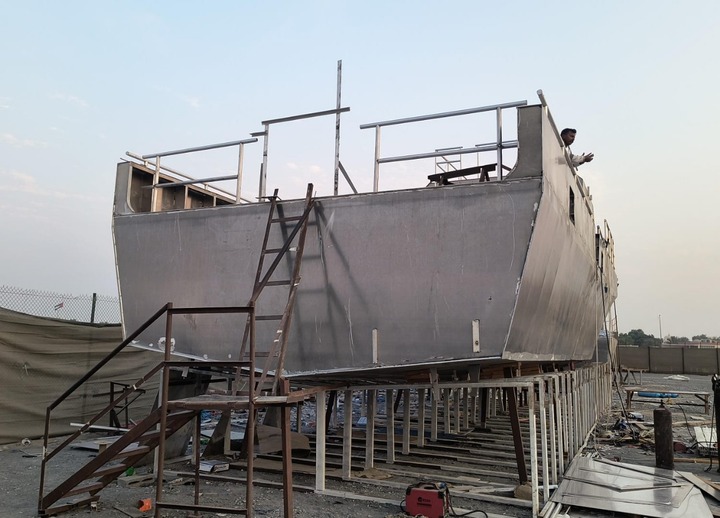
Marine transportation is changing quickly. Vessel owners today are not only looking for boats that are strong and durable; they also want better speed, fuel efficiency, lower maintenance, and improved environmental performance. This is one reason aluminium has become an increasingly popular material for modern marine vessels.
The demand for aluminium boat builders is growing because aluminium offers an attractive combination of low weight, strength, corrosion resistance, and flexibility in construction. According to ASM International, aluminium's low density, corrosion resistance, and weldability make it suitable for applications ranging from fishing boats and ferries to military and commercial vessels.
Why Aluminium Is Becoming Popular
One of the biggest advantages of aluminium is its weight. Aluminium has a density of roughly 2.7 tonnes per cubic metre, while mild steel is around 7.8 tonnes per cubic metre. This substantial difference allows engineers to create lightweight hulls without sacrificing the structural performance required for many marine applications.
A lighter vessel can require less propulsion power to reach a particular speed. Depending on hull design, engine type, payload, and operating conditions, this can improve acceleration and fuel efficiency. For vessels that operate frequently, such as passenger boats, workboats, and crew transfer vessels, these advantages can become significant over time.
Growing Demand in the UAE
The UAE has developed into an important maritime and logistics hub, supported by major ports, offshore activities, coastal transportation, tourism, and marine infrastructure. This environment is creating demand for specialized vessels designed for different commercial and operational purposes.
The development of modern boats manufacturer in UAE capabilities is helping meet this demand through customized vessel construction. Aluminium boats can be designed for passenger transportation, marine security, rescue operations, offshore support, tourism, fishing, and general port activities.
Instead of using the same design for every application, modern builders can modify hull dimensions, deck arrangements, cabins, seating, propulsion systems, and equipment according to the operator's requirements.
The Importance of Lightweight Construction
Weight has a direct relationship with vessel performance. When unnecessary weight is removed from a boat, designers have greater flexibility to improve speed, payload, or efficiency.
This is particularly useful for high-speed vessels. A lightweight hull can improve acceleration and maneuverability, while the propulsion system may require less energy to achieve the desired performance.
Research from the World Bank has also highlighted the importance of aluminium's lower weight in marine transportation and its potential use in efficient short-sea and electric ferry applications.
For commercial operators, better efficiency can mean lower operating expenses, especially when a vessel makes several journeys each day.
Aluminium and Marine Corrosion
Marine vessels constantly face exposure to seawater, humidity, salt spray, and changing weather conditions. Corrosion protection is therefore an essential part of vessel design.
Aluminium naturally develops a protective oxide layer when exposed to air, which provides useful corrosion resistance. However, aluminium is not completely corrosion-proof. Galvanic corrosion can occur when aluminium comes into contact with certain dissimilar metals in a marine environment.
For this reason, proper electrical isolation, material selection, coatings where necessary, drainage, inspection, and maintenance are important.
Marine-grade alloys such as 5083 are commonly used in suitable applications because they offer a useful combination of strength, corrosion resistance, and weldability.
Modern Aluminium Boat Building
Today's aluminium boat building process involves much more than cutting and welding metal. It starts with detailed engineering and naval architecture.
Designers consider vessel stability, displacement, structural loads, passenger or cargo capacity, propulsion requirements, operating conditions, and safety standards before fabrication begins.
Computer-aided design allows engineers to create detailed digital models and identify potential issues before production. CNC cutting can improve dimensional accuracy, while modern welding procedures help create strong structural joints.
A typical construction process may include hull fabrication, frame installation, bulkhead construction, deck assembly, cabin fabrication, welding, propulsion installation, electrical work, painting or finishing, and final testing.
This combination of technology and skilled craftsmanship allows builders to produce vessels for specific operational needs.
Applications of Aluminium Vessels
Aluminium boats are used across many areas of marine transportation. Passenger ferries can benefit from lightweight construction and efficient operation. Patrol and rescue boats need speed, maneuverability, and durability. Workboats require strong structures that can withstand regular commercial use.
Crew transfer vessels can also benefit from lightweight hulls because they may operate frequently between ports and offshore facilities. Fishing and recreational boats are other areas where aluminium construction can provide useful advantages.
The material's versatility allows designers to develop different hull shapes and configurations depending on the intended application.
Sustainability and Future Propulsion
Sustainability is becoming increasingly important in the marine industry. Operators are exploring hybrid propulsion, electric boats, alternative fuels, and more efficient hull designs to reduce emissions and operating costs.
Lightweight construction can support these developments. A lighter vessel generally requires less energy to move under comparable conditions, which can be especially useful for electric vessels where battery capacity is limited.
Aluminium is also recyclable, adding another sustainability advantage. At the end of a vessel's useful life, aluminium can be recovered and reused in new industrial applications.
Technology Is Changing Boat Construction
Digital technology is making marine construction more accurate and efficient. Three-dimensional modelling, structural analysis, CNC fabrication, modern welding equipment, and improved quality-control systems are helping builders produce more consistent vessels.
The role of a modern boat building company is consequently becoming broader. Builders increasingly need to understand not only hull fabrication but also propulsion, electrical systems, navigation equipment, safety requirements, and vessel integration.
VU Marine reflects this modern approach by working across shipbuilding and marine services while supporting aluminium vessel construction and other specialized marine requirements.
Challenges to Consider
Aluminium offers many advantages, but it also requires specialized expertise. Welding can influence material properties around heat-affected areas, so correct welding procedures are essential.
Builders must also consider impact resistance, fatigue, fire-safety requirements, galvanic corrosion, insulation, and long-term maintenance.
Therefore, successful aluminium vessel construction depends on engineering quality and skilled fabrication rather than simply choosing a lightweight material.
Conclusion
Aluminium is playing an important role in the transformation of marine transportation. Its low weight, strength-to-weight ratio, corrosion resistance, recyclability, and fabrication flexibility make it suitable for many modern vessels.
As operators continue looking for faster, more efficient, and more sustainable marine transportation solutions, aluminium construction is likely to remain an important part of the industry's future.
The combination of lightweight materials, digital design, advanced fabrication, efficient propulsion, and experienced marine engineering can help create vessels that are better suited to the changing demands of modern maritime operations.