Tug Building Company: How Modern Technology Is Transforming Tugboats
Posted by Piyush Chaurasia
Filed in Other 27 views
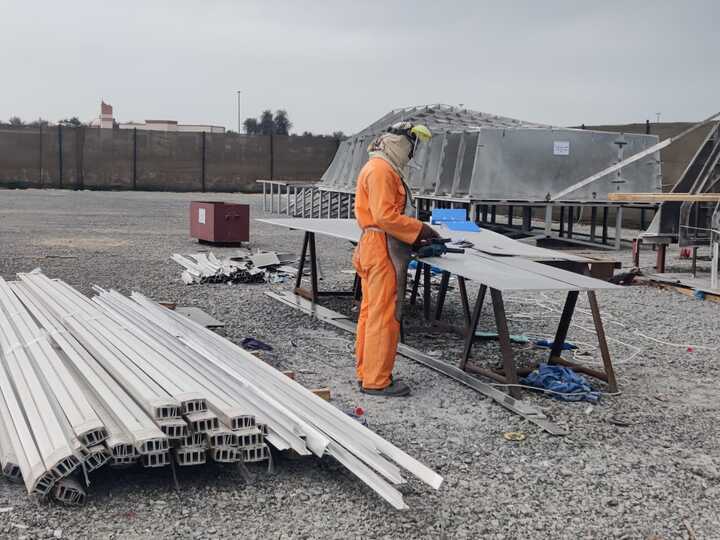
Tugboats play a vital role in keeping marine operations safe and efficient. They assist large vessels while entering or leaving ports, help with docking and undocking, support offshore projects, move heavy equipment, and perform towing operations. Their compact size can be misleading because these vessels need tremendous pulling power and precise control. For a Tugs building company, meeting these demanding requirements means combining strong construction with modern technology and advanced marine engineering. With the maritime industry becoming more focused on efficiency, safety, and environmental performance, technology is now playing a much bigger role in tugboat construction.
Modern tugboat development involves much more than choosing a powerful engine. Designers now consider hull efficiency, propulsion technology, digital systems, lightweight materials, emissions, crew safety, and maintenance from the beginning of a project. This approach is changing how tugboats are designed, built, and operated.
Modern Engineering in Tugboat Design
Technology has significantly improved the way tugboats are designed. Engineers can now create detailed digital models and test different design concepts before construction starts. Computer-aided design and three-dimensional modelling make it easier to evaluate the arrangement of machinery, accommodation areas, tanks, deck equipment, and other components.
Computational Fluid Dynamics is also useful for studying the movement of water around the hull. By analysing resistance and water flow, designers can develop hull shapes that support better performance and efficiency.
Structural simulation provides another advantage. Engineers can examine how the hull may respond to towing loads, waves, equipment weight, and other operating conditions. Identifying potential weaknesses during the design stage can save both time and construction costs.
Development of Hybrid Propulsion
Propulsion is one of the most important areas of innovation in tugboat construction. Conventional diesel engines remain popular because tugboats need significant power, but hybrid systems are becoming an attractive option for operations where energy demand changes frequently.
A hybrid propulsion system can combine diesel engines with batteries and electric motors. During low-demand periods, the vessel may rely more on stored electrical energy, while the main engines can provide additional power when heavy towing or escort work is required.
The International Maritime Organization estimated that shipping produced around 1,076 million tonnes of greenhouse-gas emissions in 2018, compared with 977 million tonnes in 2012. This has increased the focus on technologies capable of improving marine fuel efficiency and reducing emissions.
Research published in 2025 also showed that hybrid tugboat performance can vary considerably according to operating conditions, with simulated fuel savings ranging from 5.2% to 72.4% in different scenarios. This highlights the importance of designing propulsion systems around the actual working profile of a vessel.
Growing Use of Lightweight Materials
The construction material used for a tugboat can influence its performance, maintenance, and operating costs. Aluminium has become an important option for certain types of marine vessels because it is lightweight and provides a useful strength-to-weight ratio.
For this reason, Aluminum tug builders are increasingly relevant for projects where reducing vessel weight can provide operational advantages. A lighter vessel may require less energy for movement and can offer improvements in speed or payload, depending on its design.
However, aluminium is not automatically the right choice for every tug. Engineers must evaluate structural strength, fatigue, welding techniques, corrosion management, fire protection, and the intended operating environment before selecting the material.
More Efficient Engine Technology
Modern tugboats can also benefit from improved internal-combustion engines and emission-control equipment. Electronic engine management systems can optimise engine performance, while technologies such as Selective Catalytic Reduction can help reduce nitrogen oxide emissions.
Cleaner engines are especially valuable in ports because tugboats often spend long periods operating near populated coastal areas. Reducing exhaust emissions can therefore support better local air quality.
The industry is also investigating alternative energy sources, including batteries, hydrogen, methanol, and other lower-carbon fuels. However, their adoption depends on factors such as fuel infrastructure, storage requirements, vessel range, safety, availability, and project economics.
Smart Maintenance Through Data
Digital monitoring is changing the traditional approach to tugboat maintenance. Sensors installed throughout a vessel can collect information about engine temperature, pressure, vibration, fuel consumption, generators, gearboxes, batteries, and other machinery.
This data can help operators identify problems before they become serious. For instance, an unusual vibration pattern in rotating machinery could indicate wear or another developing fault.
Instead of following only fixed maintenance schedules, operators can use equipment data to plan inspections and repairs according to actual operating conditions. This predictive approach can reduce unexpected breakdowns and improve vessel availability.
For tugboats involved in critical port operations, avoiding unplanned downtime can be particularly valuable.
Improved Propulsion and Manoeuvring
A tugboat must be able to change direction quickly and operate accurately in restricted waters. Modern propulsion systems have improved this capability considerably.
Azimuthing propulsion and advanced thruster arrangements allow thrust to be directed in different directions, giving the vessel greater control. Controllable-pitch propellers can also help adjust thrust according to operational requirements.
These systems are particularly useful when assisting large ships because tugboats may need to move sideways, rotate, stop quickly, or maintain a precise position.
Modern control stations can bring propulsion, steering, navigation, and machinery information together, giving operators a clearer view of the vessel's condition while manoeuvring.
Technology Supporting Crew Safety
Tugboat operations can involve challenging weather, heavy towing equipment, large commercial ships, and confined harbour spaces. Safety technology therefore plays an important role in modern vessel design.
Radar, AIS, electronic navigation systems, cameras, thermal imaging, communication equipment, and automated alarms can all improve situational awareness.
Cameras can provide additional visibility around the deck and machinery areas, while thermal cameras may assist during night operations. Alarm systems can alert crew members when important machinery parameters move outside their normal range.
Technology is designed to support the crew rather than eliminate the need for experienced operators. Human decision-making remains essential during towing, escorting, docking assistance, and emergency situations.
Tugboat Development for UAE Operations
The UAE's active maritime environment creates demand for reliable vessels capable of supporting ports, offshore projects, commercial shipping, and marine infrastructure.
For Tug builders in UAE, local operating conditions need to be considered during the design process. High temperatures, saltwater exposure, cooling requirements, corrosion protection, machinery accessibility, and operational reliability can all influence construction decisions.
A well-designed tug should also be practical to maintain. Easy access to engines, pumps, electrical systems, and other important equipment can reduce maintenance time and help operators keep the vessel available for service.
VU Marine combines marine construction knowledge with modern engineering approaches to develop vessels and marine solutions according to operational requirements.
Future Possibilities in Tugboat Construction
The next generation of tugboats is likely to become increasingly connected and energy efficient. Battery technology, hybrid propulsion, alternative fuels, automated monitoring, digital twins, and intelligent energy-management systems could all influence future vessel designs.
Hydrogen fuel cells are another technology being investigated for marine applications. Research has indicated that hydrogen fuel-cell propulsion could potentially achieve significant reductions in greenhouse-gas impacts compared with conventional diesel propulsion, although the actual results depend on fuel production, vessel operation, and system design.
At the same time, aluminium tug manufacturers may continue developing lightweight vessel concepts for applications where aluminium construction provides practical benefits.
The key challenge will be selecting technology that matches the vessel's actual mission. A harbour tug, offshore tug, escort tug, and towing vessel may all require different combinations of propulsion, materials, automation, and onboard systems.
Conclusion
Technology is changing tugboats in almost every aspect of their development. Digital engineering is helping designers create more efficient hulls, modern propulsion systems can improve fuel performance, lightweight materials can reduce unnecessary weight, and smart monitoring can make maintenance more predictable.
For a modern Tugs building company, the focus is increasingly shifting toward complete vessel performance rather than simply maximum pulling power. A successful tug must combine strength with manoeuvrability, efficiency, safety, reliability, and ease of maintenance.
As maritime operations continue to evolve, new technologies will provide more opportunities to improve tugboat performance. The future of tugboat construction will ultimately depend on using these innovations in a practical way while maintaining the reliability and power that marine operators expect from these essential working vessels.