Jebel Ali Port Guide to Terminals Services and Trade Role
Posted by Freya Parker
Filed in Business 17 views
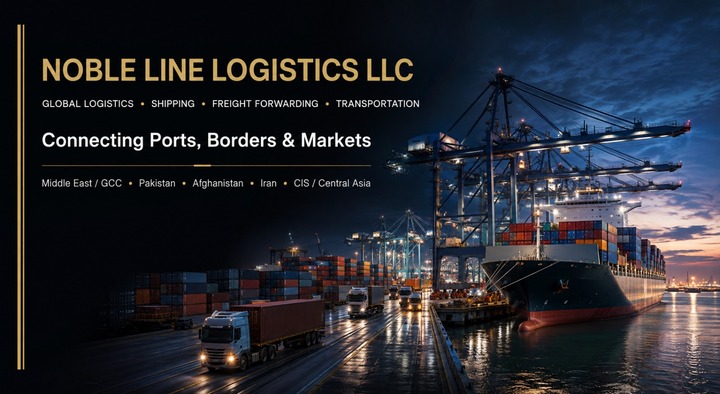
Most shipping lines that serve the Gulf call at Jebel Ali. If you import into the UAE, re-export to another market, or send cargo to the wider region through Dubai, there's a good chance your container spends at least a few days there.
Knowing how the port is laid out and how it works helps you plan better. You'll understand why some shipping lines quote you one terminal and not another, what free days really mean, and why so many companies set up next to the port in the first place. Here's a practical overview.
What Is Jebel Ali Port?
Jebel Ali Port is a deep-water port on the Arabian Gulf coast of Dubai, about 35 kilometers southwest of the city center. It opened in 1979 and is operated by DP World. Ships can berth there in deep water, including the largest container vessels currently in service, and the facility is one of the biggest man-made harbors in the world.
It's widely regarded as the busiest port in the Middle East. Container volumes run in the millions of TEU (twenty-foot equivalent units) every year, and the port handles general cargo, bulk, vehicles, project cargo, and refrigerated goods on top of containers. Exact throughput figures change from year to year, so check DP World's latest published numbers if you need them for a report.
Why the Port Sits Where It Does
Jebel Ali was built on purpose, in an empty stretch of coast, and planned as a port and industrial area together. That decision shaped everything that came after. Unlike ports that grew slowly out of an old city, Jebel Ali had space for wide terminals, deep channels, road access, and a large free zone next to the berths.
Its location also helps. Jebel Ali sits at a natural crossing point between Asia, Africa, and Europe. Shipping lines building networks between those regions often find that stopping here is both efficient and commercially sensible, since the port has plenty of onward connections and a large local market to serve.
The Terminals
Jebel Ali's container handling is spread across several terminals, and the layout has grown over the years. The exact naming and configuration change as new capacity opens, so confirm the current details with DP World or your shipping line, but in general terms the port includes:
Container terminals. Multiple container terminals with quay cranes, yard equipment, and reefer plugs handle the port's container traffic. Shipping lines are assigned to specific terminals and berths, so your carrier's schedule tells you where your container will be discharged or loaded.
General cargo and breakbulk berths. Dedicated berths handle cargo that doesn't fit in a container: steel, machinery, project components, and oversized equipment.
Ro-Ro facilities. Vehicles, trucks, and other wheeled cargo are handled at roll-on/roll-off berths and nearby yards.
Bulk and liquid handling. Some commodities move through specialized berths and storage areas, depending on the cargo and the operator.
If you're sending or receiving cargo, the practical step is to ask your forwarder or shipping line which terminal your vessel will call at. Gate procedures, cut-off times, and storage terms can differ between terminals.
Services at the Port
Jebel Ali offers more than berths and cranes. The port is part of a larger logistics system, and many services sit within or close to it.
Container handling. Loading, discharge, transshipment, and storage in the yard. Reefer containers are supported with power connections and monitoring.
Breakbulk and project cargo. Heavy lifts, oversized items, and cargo for construction, energy, and industrial projects.
Vehicle and Ro-Ro handling. Import and export of cars, machinery, and equipment.
Storage and warehousing. Yards for containers, along with covered warehouses, cold storage, and bonded facilities in and around the port and the free zone.
Customs processing. Declarations are filed electronically, and Dubai Customs handles inspections and clearance. Bonded and transit regimes let cargo move through the port without local duty being charged until it's cleared for domestic use.
Inspection and scanning. Containers may be selected for scanning or physical checks, and dangerous goods are subject to extra requirements.
Inland connections. Trucks carry cargo out of the port along major highways to other emirates and across the border to neighboring countries. Rail and air connections are part of the wider regional plan, and the port is linked to other facilities by dedicated logistics corridors.
Jebel Ali Free Zone (JAFZA)
The port's most distinctive feature might be the free zone next to it. Jebel Ali Free Zone, established in the mid-1980s, hosts thousands of companies ranging from small traders to large manufacturers and distribution centers.
The reasons companies locate there are practical.
- Goods can move between the port and the company's premises with minimal delay.
- Customs duty is generally suspended on goods held within the zone, until they're released to the domestic market.
- Companies can hold full foreign ownership in a free zone, subject to the regulations that apply.
- Warehousing, light manufacturing, assembly, and re-packing can be done close to the berths.
That combination makes JAFZA a natural base for businesses that import goods, add value, and send them on to other markets. The zone's rules cover licensing, customs treatment, and what can be done within its boundaries, so companies should check the conditions that apply to their activity.
The Port's Role in Trade
A Regional Re-Export Hub
A large part of what arrives at Jebel Ali is destined for somewhere else. Cargo comes in from Asia, Europe, and elsewhere, is sorted and consolidated, and leaves for markets across the Gulf, the Indian subcontinent, East Africa, Iraq, Iran, and Central Asia. Many shippers use Dubai as a distribution point because it offers frequent sailings and consolidated services that a direct route might not.
A Transshipment Center
Containers often arrive on a large vessel, are unloaded, and go out again on a smaller feeder ship, or on another line's service. Jebel Ali's scale and schedule give shipping lines a place to connect their networks, and it's a major factor in how cargo moves across the Arabian Sea and beyond.
Connecting Global Supply Chains
The port connects to dozens of shipping lines and hundreds of destinations. For businesses, that means more choices on routing, transit time, and rates, especially when compared with smaller ports that have fewer services.
Supporting the UAE Economy
Trade through Jebel Ali supports the UAE's economy well beyond shipping itself, from the retail and construction sectors to manufacturing, food supply, and logistics. The port and the free zone are an anchor for Dubai's role as a trading city.
Practical Points for Shippers
Check your free days. Every container has a period during which storage is free, and it varies by carrier and terminal. After that, charges start. Ask before the vessel arrives.
Know your terminal and cut-off times. Export containers have to be gated in before a set deadline ahead of the vessel's departure. Miss it, and the container rolls to the next sailing.
Prepare documents in advance. Customs declarations, delivery orders, and any permits should be ready when the cargo arrives. Delays with paperwork are more expensive than most other problems.
Plan for dangerous goods. Hazardous cargo has to be declared, packaged, and documented correctly, and not every service accepts it.
Book trucking early. During busy periods, transport capacity between the port and inland destinations gets tight.
Insure the cargo. Port handling, transshipment, and storage all carry some risk, and carrier liability is usually limited.
If you're working out how your cargo should move through the port, a Dubai-based provider like Noble Line Logistics LLC can coordinate the shipping line, customs, and inland leg, and can tell you which terminal and routing suit the shipment.
Frequently Asked Questions
Who operates Jebel Ali Port?
DP World, the Dubai-based global port operator, runs the port.
Where is Jebel Ali Port located?
On the Gulf coast of Dubai, southwest of the city center, next to the Jebel Ali Free Zone.
Is Jebel Ali the largest port in the Middle East?
It's commonly described as the busiest and largest in the region by container volume, though figures vary by year and how they're measured.
What is the difference between Jebel Ali Port and JAFZA?
The port is the shipping facility where vessels berth and containers are handled. JAFZA is the free zone next to it, where companies are based and where duty-suspension rules apply.
Can I store goods at Jebel Ali under duty suspension?
Yes, through bonded facilities and free zone warehousing, subject to customs conditions and licensing.
Does Jebel Ali handle vehicles and project cargo?
Yes. It has facilities for Ro-Ro, breakbulk, and heavy or oversized cargo alongside containers.