Candle Boxes 101: Materials, Styles, and How to Choose
Posted by Boxo Packaging
Filed in Business 38 views
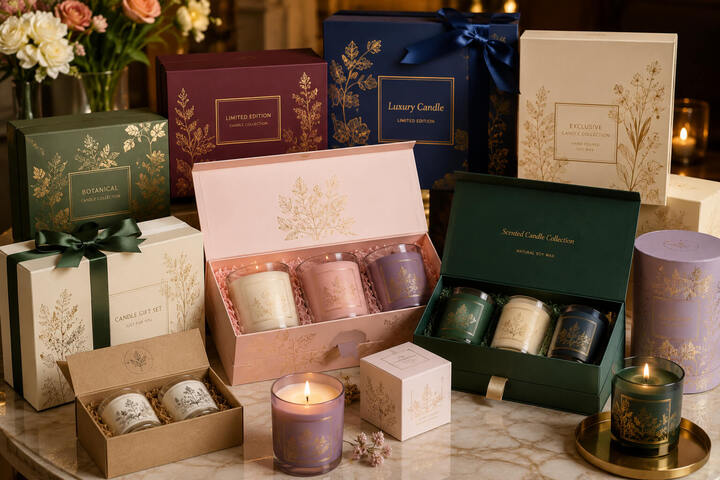
Candle packaging carries more responsibility than it might first appear. It protects a genuinely fragile product, often glass, wax, and sometimes an open wick, while also serving as one of the primary tools a candle brand has for communicating scent, mood, and quality before a customer ever lights the product. For anyone new to sourcing candle packaging, or looking to reassess an existing approach, understanding the core material and style options available, and how to actually choose between them, makes the process considerably less overwhelming.
Why Candle Packaging Requires Special Consideration
Fragility Is a Real, Not Theoretical, Concern
Glass candle vessels are prone to chipping or cracking during shipping and handling, and even tin or ceramic containers can dent or scratch without adequate protection. Candle packaging needs to account for this fragility directly, rather than relying on generic packaging designed for more durable products.
Scent and Presentation Are Core to the Purchase Decision
Unlike many products, candles are often bought based on an anticipated sensory experience, scent, ambiance, mood, that can't be fully communicated through the product itself before purchase. Packaging plays a real role in setting that expectation, through design, material choice, and sometimes structural elements like scent-release features.
Heat Sensitivity Adds a Layer Most Categories Don't Face
Wax is sensitive to heat and can soften, melt, or shift during storage and transport under warm conditions. This means candle packaging sometimes needs to account for structural support that keeps a candle stable even if the wax itself softens slightly, a consideration most other product categories simply don't need to address.
Common Materials Used for Candle Boxes
Kraft Paperboard
Affordable, naturally textured, and widely associated with a considered, artisanal aesthetic. Works well for candle brands leaning into a natural or minimalist visual identity, and holds up reasonably well structurally when the correct weight is chosen for the product's size and weight.
Rigid Board
Thicker and more structurally solid than standard paperboard, commonly used for premium or gift-focused candle packaging. Rigid boxes offer strong protection and a more substantial, high-end feel, though they come at a higher cost than lighter materials.
Corrugated Cardboard
Provides additional structural strength through its layered construction, often used as an outer shipping layer for candles being sent directly to customers, sometimes in combination with a more decorative inner box or sleeve for presentation.
Coated or Laminated Paperboard
Offers a smoother, often glossier finish, suited to brands aiming for a more polished, contemporary look rather than a natural or textured aesthetic. Generally costs more than plain kraft or standard paperboard.
Recycled and FSC-Certified Materials
Increasingly common given how closely candle buyers, particularly in the home and self-care space, tend to align with sustainability values. Available across kraft, rigid, and coated material types, depending on the desired look.
Common Candle Packaging Styles
Tray and Sleeve Boxes
A fitted tray holds the candle securely in place, with an outer printed sleeve sliding over it for branding and presentation. This format addresses fragility directly through the tray's precise cutout while offering a strong branding surface through the sleeve, making it one of the more popular formats for mid-range to premium candles.
Two-Piece Telescoping Boxes
A separate base and lid, with the lid fitting down over the base like a shoebox. This style offers full, even protection on all sides and creates a deliberate, satisfying opening experience, often associated with a premium unboxing moment.
Folding Cartons
A single-piece box that folds and locks into shape, typically more cost-effective and faster to produce than tray-and-sleeve or two-piece formats. Well suited to simpler, lower-cost candles or higher-volume production runs where cost efficiency takes priority.
Window Boxes
Boxes with a die-cut or clear window revealing part of the candle inside, letting the product's color, texture, or vessel design contribute directly to the shelf appeal without relying purely on printed graphics.
Kraft Wraps and Bands
A simple paper wrap or band around the candle itself, offering minimal but distinctive branding, well suited to brands prioritizing a natural, understated aesthetic or lower production costs over more elaborate structural packaging.
How to Choose the Right Candle Packaging for Your Business
Start With the Candle's Physical Characteristics
Glass jar candles, tin candles, and pillar candles all have different protection needs. Heavier glass vessels generally require sturdier materials and more precise interior fitting than lighter tin candles, which can often work well with simpler packaging formats.
Consider Your Primary Sales Channel
Candles sold primarily in-store benefit from packaging optimized for shelf presentation and quick handling, while candles shipped directly to customers need packaging engineered specifically for transit durability, sometimes requiring an additional outer shipping layer beyond the primary presentation box.
Match Packaging Tier to Price Point
Premium, higher-priced candles generally benefit from more substantial packaging, rigid board, tray and sleeve, or two-piece formats, that reinforces the product's value, while more affordable candles are often better served by simpler, cost-effective folding cartons that don't inflate the overall price unnecessarily.
Factor In Scent Rotation and Seasonal Products
Brands that frequently introduce new scents or seasonal editions should consider how packaging design accommodates this rotation. Neutral, reusable structural elements paired with easily updated printed sleeves or labels tend to offer more flexibility than fully committed, scent-specific box designs.
Test Under Real Shipping and Handling Conditions
Packaging that looks and feels solid on a shelf can behave differently during actual shipping, particularly regarding heat exposure and impact resistance. Testing with real candles under conditions similar to your actual fulfillment process helps confirm a packaging choice before committing to a full production run.
Practical Tips for Getting Started
- Order physical samples before committing to a large production run, since material weight, texture, and structural performance are difficult to judge accurately from digital renderings alone.
- Confirm food and consumer safety compliance where relevant, particularly for any interior materials or coatings that will be in direct contact with the candle or wax.
- Start with your best-selling candle size or style, applying custom packaging there first before expanding a fully custom system across an entire product line.
- Work with a supplier experienced specifically in candle packaging, since structural fit, heat sensitivity, and fragility considerations differ meaningfully from general retail packaging expertise.
The Bottom Line
Choosing the right candle box comes down to matching material and structural style to the specific candle's fragility, your primary sales channel, and your price positioning, rather than defaulting to whatever packaging style happens to be trending or most commonly used across the category. Understanding the practical trade-offs between kraft, rigid board, and corrugated materials, alongside the structural differences between tray and sleeve, two-piece, and folding carton styles, gives candle brands a clear framework for making a packaging decision that genuinely fits their product and business, rather than one chosen by default.