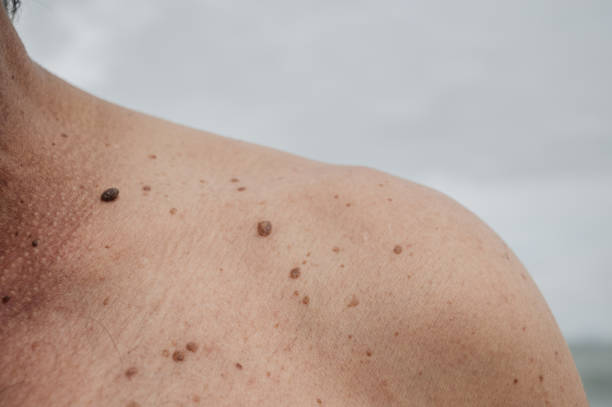
When deciding to remove a mole, the conversation usually revolves around two things: the scar and the cost. However, the method of removal determines something far more important: whether the mole can be tested for skin cancer. Mole Removal in Riyadh The choice isn't just cosmetic—it's medical. For individuals considering Mole Removal in Riyadh, understanding the differences between shave excision, surgical excision, and laser removal is essential for making an informed decision.
Surgical Excision: The Definitive Method for Suspicious Moles
Surgical excision is the gold standard when there is any concern about a mole. The procedure involves cutting out the entire mole along with a small margin of healthy skin and closing the wound with fine sutures . This ensures the complete removal of the mole, including any deeper cells that might be present beneath the surface.
The primary advantage of surgical excision is diagnostic certainty. The removed tissue is preserved intact, allowing for a full histopathological examination—the only way to definitively confirm whether a mole is benign or malignant . For those seeking comprehensive skin health monitoring, this is a crucial benefit.
The trade-off is that surgical excision leaves a small linear scar . However, a skilled dermatologist can place the incision in a natural skin crease and use meticulous suturing to minimise its visibility . The stitches are typically removed within 7 to 14 days . This method is recommended for moles that are deep, large, changing, or have irregular features. The risk of recurrence is very low because the entire structure is removed .
Shave Excision: A Quick Option for Raised, Benign Moles
Shave excision is a minimally invasive technique used for raised moles that sit above the skin's surface . The doctor numbs the area and uses a fine blade to shave the mole flush with the surrounding skin . It is a quick procedure that typically does not require stitches .
This method is best suited for benign moles where scarring is a primary concern. It often results in a flat, small scar rather than a linear one and has a shorter recovery time of about one to two weeks .
The main limitation is that shave excision only removes the surface part of the mole . Some cells can remain, leading to a higher chance of recurrence . It is therefore not recommended for suspicious moles where a full biopsy is required . The removed tissue may still be sent for analysis, though it may not capture the deepest part of the mole .
Laser Removal: A Precision Tool for Cosmetic Concerns
Laser mole removal uses focused light energy to break down the pigment or tissue of a mole . It is non-invasive and is most effective for small, flat, and clearly benign moles in cosmetically sensitive areas like the face . The procedure is relatively painless, does not require stitches, and recovery is quick, often with minimal to no visible scarring .
The significant drawback is that laser removal destroys the tissue, meaning there is nothing left to send to a laboratory for a biopsy . As a result, it is never suitable for a suspicious or changing mole, as it could delay a diagnosis of skin cancer . Additionally, deeper moles may not be completely removed and can require multiple sessions .
Choosing the Right Method for You
The right removal method depends entirely on the mole, not on a personal preference for one technique . For a mole with any suspicious features—such as an irregular shape, changing appearance, or bleeding—surgical excision is the only safe choice to allow for testing . For raised, non-cancerous moles, a shave excision offers a neat, low-fuss option with a good cosmetic result . For small, flat, clearly harmless moles in visible areas, laser removal may be a good option, provided the doctor confirms its benign nature . When searching for Mole Removal in Riyadh, prioritise a consultation that begins with an assessment of the mole itself, not the price list.
For those seeking expert guidance and customised aesthetic care, you can book an appointment consultation at the Enfield Royal Clinic.
Frequently Asked Questions
Which mole removal method leaves the smallest scar?
Laser removal often leaves the least visible mark for suitable moles, but shave excision can also result in a flat, smooth scar with minimal visibility .
Can a mole be tested for cancer after laser removal?
No. Laser removal destroys the tissue, making histopathological testing impossible, which is why it is not used for suspicious moles .
What is the best method for a mole that looks unusual?
Surgical excision is the gold standard for any mole with suspicious features, as it allows for complete removal and a full biopsy .
Will a mole grow back after shave removal?
There is a small chance, as some cells may remain. Surgical excision carries a much lower risk of recurrence .
Do all mole removal methods require stitches?
No. Shave excision and laser removal typically do not require stitches. Surgical excision uses fine sutures to close the wound .