How Do Research Peptide Companies Verify Peptide Quality?
Posted by Pristine Peptide
Filed in Other 35 views
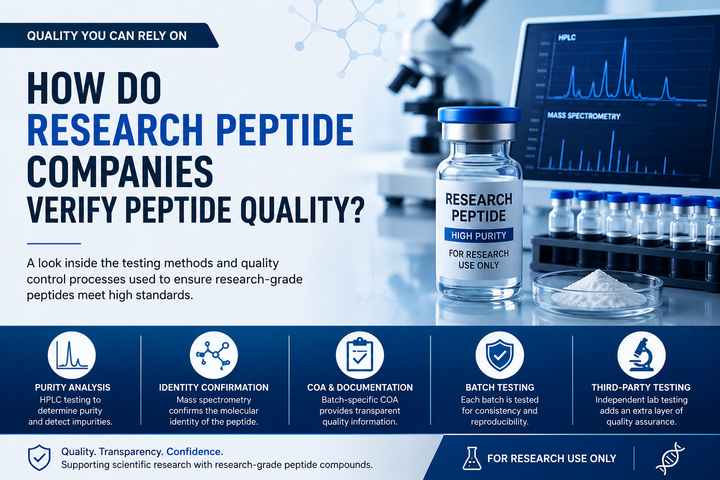
Peptide quality is an important consideration for researchers working with laboratory compounds. Research peptide companies may use multiple analytical methods and quality-control procedures to evaluate a compound before it is supplied for research applications. Rather than relying on a single measurement, quality assessment can involve purity testing, identity confirmation, batch documentation, and independent analysis.
Understanding these processes can help researchers make more informed decisions when evaluating research peptide suppliers.
1. Purity Analysis
Purity testing helps determine how much of a sample consists of the intended peptide compared with related substances or impurities. High-performance liquid chromatography (HPLC) is commonly used to separate components within a sample and assess its chromatographic purity.
Researchers should review both the reported purity and the analytical method used to determine it.
2. Peptide Identity Confirmation
Purity does not necessarily confirm the identity of a compound. Research peptide companies may use analytical techniques such as mass spectrometry to compare the measured molecular mass with the expected characteristics of the intended peptide.
Identity confirmation provides additional information that can support accurate characterization of a research compound.
3. HPLC Testing
HPLC is an important analytical technique in peptide quality assessment. It separates compounds based on their chemical properties and can help identify the primary peptide peak and potential related substances.
When reviewing HPLC information, researchers may consider the reported result, testing method, chromatographic data, and batch information.
4. Mass Spectrometry
Mass spectrometry can help determine the molecular mass of a peptide. This information can be compared with the expected molecular characteristics of the compound.
Used together with other analytical techniques, mass spectrometry can provide stronger evidence for peptide identity and characterization.
5. Certificate of Analysis
A Certificate of Analysis (COA) provides batch-specific quality information. Depending on the supplier and testing process, a COA may include the compound name, batch number, purity result, analytical methods, and other specifications.
For researchers comparing research peptide companies, accessible and clearly presented COA documentation can be an important indicator of quality transparency.
6. Batch Testing and Consistency
Testing individual batches can help suppliers maintain documented quality information over time. Batch numbers allow researchers to connect a specific research compound with its corresponding analytical documentation.
Consistent documentation can also support laboratory recordkeeping and help researchers distinguish between different production batches.
7. Third-Party Testing
Some research peptide companies use independent laboratories for additional analytical testing. Third-party testing can provide another source of analytical information and may complement internal quality-control procedures.
Researchers should review what was tested, which analytical methods were used, and whether the documentation corresponds to the relevant batch.
What Should Researchers Look For?
How do research peptide companies verify peptide quality? They may use a combination of purity analysis, identity confirmation, HPLC, mass spectrometry, batch testing, COA documentation, and third-party testing.
No single quality indicator provides a complete picture. Researchers should evaluate the available analytical information collectively and consider whether the documentation is sufficiently detailed for their intended laboratory research.
Companies such as Pristine Peptide can be evaluated based on the transparency of their quality information, analytical documentation, and research-focused product standards. For responsible scientific research, understanding how a peptide is characterized is just as important as reviewing its stated specifications.