Can Silhouette Threads Work When Skin Laxity Is Still Mild?
Posted by Tajmeels Clinic
Filed in Health 0 views
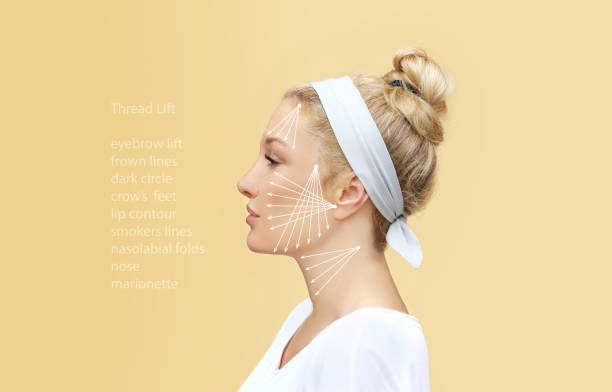
The short answer is yes—and in fact, mild laxity is the ideal stage for treatment. Facelift with Silhouette Threads in Dubai achieves its best results when the tissue has begun to descend but still retains good elasticity, allowing the threads to fully restore the original facial architecture with minimal correction. The primary benefit of early intervention is prevention: treating mild laxity now delays the progression of facial aging, potentially postponing the need for more aggressive treatments by five to ten years.
The Early Intervention Advantage
Why Waiting Is a Mistake
Many patients delay treatment because they believe their laxity is "not bad enough yet." This is a fundamental misunderstanding of how facial aging progresses. Laxity is not a static condition—it is a progressive descent that accelerates over time. The longer the tissue remains in a descended position, the more the skin loses its ability to contract, and the more the underlying fat compartments atrophy.
Waiting until the laxity is "bad enough" means waiting until the tissue has lost its elasticity. At that point, the thread lift is less effective because the skin cannot contract around the repositioned scaffold. The result is a less crisp lift and a shorter duration of improvement.
The early intervention approach treats the tissue while it is still responsive. The threads lift the mildly descended tissue back to its original position. The skin, still elastic, contracts around the new position. The result is a complete restoration that looks natural and lasts longer.
The Dubai Acceleration Factor
In Dubai's climate, facial aging is accelerated. The combination of chronic UV exposure, dry air conditioning, and environmental stress degrades collagen and elastin at a faster rate than in cooler climates. This means that mild laxity in a Dubai patient may progress to moderate laxity in two to three years—half the time it would take in a temperate climate.
This accelerated timeline creates urgency. The Dubai patient who waits until the laxity is "obvious" has missed the window for optimal thread lift results. The patient who intervenes early can stay ahead of the aging curve, maintaining facial definition through the years when untreated peers begin to show visible aging.
Data Comparison: Early vs. Delayed Intervention
Why Timing Determines Outcome
The table below compares the outcomes of Silhouette Soft treatment for mild laxity versus delayed treatment for moderate laxity in a facelift with Silhouette Threads in Dubai.
| Parameter | Mild Laxity (Early Treatment) | Moderate Laxity (Delayed Treatment) |
|---|---|---|
| Tissue Elasticity | Good—skin snaps back quickly | Fair—slower rebound |
| Thread Count Required | Fewer (2 per side per area) | More (3-4 per side per area) |
| Degree of Correction | Complete restoration | Significant improvement |
| Result Character | Natural, subtle | More noticeable, less crisp |
| Longevity | 24+ months | 18-24 months |
| Collagen Response | Robust | Moderate |
| Maintenance Interval | 24 months | 18 months |
| Risk of Complications | Lower | Higher |
The data confirms that early treatment requires fewer threads, achieves better correction, lasts longer, and carries less risk. The advantages of early intervention are clear.
Facelift with Silhouette Threads in Dubai: The Early Treatment Protocol
The Mild Laxity Assessment
At Tajmeels Clinic, the assessment for mild laxity begins with a detailed evaluation. The practitioner looks for the earliest signs of tissue descent:
The Mid-Face: A subtle flattening of the malar area. The cheeks no longer project as they once did. The nasolabial folds are just beginning to deepen.
The Jawline: A slight softening of the mandibular border. The jawline is still visible but less crisp than in youth. Early jowl formation may be present as a subtle heaviness at the corners of the mouth.
The Neck: Minor horizontal lines. The submental area is still firm but shows early signs of skin laxity.
The pinch test confirms the diagnosis. The practitioner lifts the skin and observes a quick rebound—indicating that the tissue still retains its elasticity and will respond well to treatment.
The Minimal Correction Approach
For mild laxity, the facelift with Silhouette Threads in Dubai follows a minimal correction approach. Fewer threads are used—typically 2 per side for the mid-face and 2 per side for the jawline. The tension is applied gently, lifting the tissue only to its original position without over-correction.
The result is subtle but meaningful. The patient does not look "different"—they look like themselves, but fresher. The cheeks are slightly more projected. The jawline is slightly more defined. The overall impression is of a face that has been preserved, not altered.
"I came in because I noticed my jawline wasn't as sharp in photos. The doctor said my laxity was mild and that now was the perfect time to treat it. The result is subtle—my friends can't tell I had anything done. But I can see the difference, and that's what matters."
— Sara K., Jumeirah
The Preventive Philosophy
Early treatment is not about achieving a dramatic transformation—it is about preservation. The goal is to restore the tissue to its original position before the descent becomes entrenched. This prevents the cascade of changes that follow: the deepening nasolabial folds, the progressive jowl formation, the loss of jawline definition.
Patients who embrace this philosophy often look the same to others for years. They avoid the progressive aging that their untreated peers experience. The result is not a dramatic before-and-after—it is a steady maintenance of youth.
Facelift with Silhouette Threads in Dubai: Expected Results
The Collagen Advantage
Patients with mild laxity have a significant advantage: their collagen response is more robust. The PLLA cones in Silhouette threads stimulate collagen production, and tissue that still has good vascularity and cellular activity responds more vigorously. The result is a thicker, more resilient dermal matrix that extends the longevity of the lift.
The collagen phase begins at week six and peaks at month six. Patients with mild laxity often report that their skin feels thicker and more elastic during this period—a quality improvement that extends beyond the mechanical lift.
"I had my threads done a year ago for early jowls. The lift was subtle at first, but my skin quality has improved so much. My face feels firmer, even now. The doctor said it was the collagen response—and he was right."
— Nadia A., Dubai Hills
The Long-Term Benefit
The most significant advantage of early treatment is longevity. Patients who treat mild laxity often enjoy results that extend to 24 months or more. The maintenance interval is longer, and the touch-up sessions require fewer threads. Over time, the cumulative benefit of early intervention becomes clear: the patient maintains their facial architecture while untreated peers show progressive aging.
For those seeking the most strategic approach, opting for a professional Facelift with Silhouette Threads in Dubai at a center that prioritizes early intervention guarantees a result that preserves facial architecture for years to come.
The Strategic Investment
Why Early Treatment Is the Smartest Investment
The math of early intervention is simple: fewer threads, better results, longer duration, lower risk. Treating mild laxity is less expensive than treating moderate laxity—and dramatically less expensive than waiting until surgery is necessary. The patient who invests in early treatment saves money in the long run and maintains their appearance more effectively.
The Dubai Context
Dubai patients are proactive. They invest in their health, their fitness, and their appearance. Tajmeels Clinic understands that the same proactive mindset applies to facial aging. The goal is not to wait for problems to become obvious—it is to address them at the first sign, when intervention is simplest and most effective.
Frequently Asked Questions
1. Am I too young for Silhouette threads if my laxity is mild?
There is no "too young" for thread lifts if the anatomical changes are present. Some patients develop mild laxity in their late thirties due to genetics or sun exposure. The key is treating the tissue at the right stage—early—not waiting for a specific age.
2. Will the results look natural with mild laxity?
Yes. Because the tissue still has good elasticity, the threads can fully restore the original facial architecture. The result looks like a younger version of your own face—not a dramatic transformation.
3. How do I know if my laxity is mild enough for early treatment?
The best way is a clinical assessment. The practitioner will perform a pinch test to evaluate skin elasticity and identify the earliest signs of tissue descent. If the skin snaps back quickly and the descent is minimal, you are an ideal candidate for early treatment.
4. Can early treatment prevent the need for a surgical facelift?
Early treatment can delay the need for surgery by 5 to 10 years or more. It does not eliminate the need entirely—facial aging is progressive. But patients who treat early often postpone surgical intervention significantly.
5. How many threads are needed for mild laxity?
Typically, 2 threads per side for the mid-face and 2 threads per side for the jawline—a total of 8 threads for a full face. This is fewer than the 12 to 14 threads typically needed for moderate laxity.
6. How long will the results last with mild laxity?
Results for mild laxity typically last 24 months or more. The robust collagen response in elastic tissue extends the longevity of the lift. Maintenance sessions at 24 months with fewer threads can sustain the result indefinitely.