Paint Correction Services in Charlotte NC for a Clear, and Reflective Finish
Posted by Zoe Parker
Filed in Business 2 views
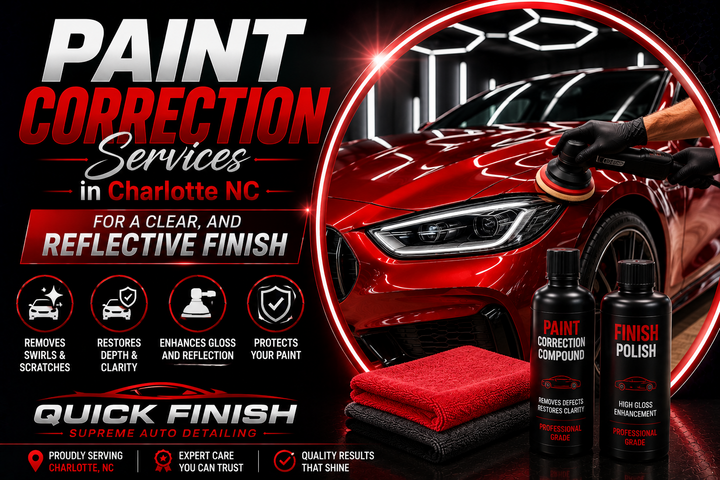
A vehicle can be thoroughly washed and still lack the deep, reflective appearance that makes automotive paint stand out. Swirl marks, fine scratches, oxidation, water spots, and other surface imperfections can scatter reflected light and make paint appear dull. Over time, repeated washing, environmental exposure, and everyday driving can gradually affect the clarity of the finish.
Professional Paint Correction Services in Charlotte NC focus on improving the condition and appearance of automotive paint by carefully refining the surface. Rather than simply covering imperfections with wax or another temporary product, paint correction uses controlled polishing techniques to reduce suitable defects and reveal a cleaner, more reflective finish.
What Paint Correction Actually Means
Paint correction is a specialized process designed to improve the appearance of a vehicle's painted surfaces. It typically involves machine polishing with carefully selected compounds and finishing products to remove or reduce certain imperfections. The process does not mean removing every scratch from every vehicle. Automotive paint has a finite thickness, and aggressive correction can unnecessarily reduce the protective clear coat. A professional approach therefore focuses on achieving a noticeable improvement while preserving the integrity of the paint.
Common Paint Problems Correction Can Address
Different vehicles have different types and levels of paint imperfections. Some of the most common concerns include:
-
Swirl marks
-
Light scratches
-
Water-spot etching
-
Oxidation
-
Paint haze
-
Fine surface defects
-
Dull or uneven-looking paint
The severity of each problem determines what type of correction is appropriate. Some defects can be significantly reduced, while deeper scratches may remain partially visible because removing them completely could require removing too much clear coat.
Why Paint Looks Less Reflective Over Time
Healthy automotive paint reflects light clearly, but surface defects interrupt that reflection. Fine scratches and swirl marks create thousands of tiny irregularities that can make the finish look hazy under direct sunlight. Environmental contamination can add another layer of visual dullness. Tree sap, road film, mineral deposits, and other contaminants may remain attached to the surface even after a normal wash. Paint correction begins with proper cleaning and preparation so that the polishing process can focus on the paint itself.
The Correction Process Starts With Inspection
A successful correction job begins before any polishing machine touches the vehicle. The paint should first be inspected under suitable lighting to identify defects, previous repairs, oxidation, and differences between panels. This evaluation helps determine how much correction is realistically possible.
The vehicle may then be thoroughly washed and decontaminated. If necessary, additional preparation is performed to remove bonded contaminants from the surface. Only after preparation can the paint be properly evaluated for polishing.
Different Levels of Correction
Not every vehicle needs the same amount of correction. A relatively new vehicle with minor wash marks may only need a light polishing treatment. An older vehicle with oxidation and more noticeable defects may require a multi-stage process.
A typical correction approach can involve:
Cutting: A compound is used to address suitable surface defects and improve clarity.
Refining: A finer polish can follow to reduce haze and improve the finish.
Finishing: The paint is carefully inspected to achieve the desired level of gloss and reflection.
The exact combination depends on the paint system, defect severity, previous correction history, and desired result.
Paint Correction Is Not Just About Shine
Gloss is one of the most visible results, but paint correction is fundamentally about surface refinement. By reducing suitable defects, the paint can reflect light more evenly. This can make the vehicle's original color appear deeper and more vibrant. Metallic and darker paints often show the difference particularly well because imperfections can be highly visible under sunlight. Correction can also provide an excellent foundation for additional paint protection.
Preparing for Ceramic Coating or Wax
Many vehicle owners choose paint correction before applying a protective product. A coating or wax applied over a properly corrected surface can provide a cleaner visual foundation. Ceramic coatings, in particular, require careful surface preparation because the coating is intended to bond to the prepared paint. Existing contamination and imperfections can affect the final appearance. Paint correction services can therefore be considered part of a larger paint-care strategy rather than an isolated service.
When Should You Consider Paint Correction?
A vehicle may be a good candidate when the paint looks noticeably dull despite regular washing or when swirl marks become obvious under direct lighting.
Correction may also be useful before:
-
Selling or showcasing a vehicle
-
Applying ceramic coating
-
Applying a new protective treatment
-
Preparing a special vehicle for an event
-
Refreshing an older paint finish
The best approach depends on the condition of the vehicle and the owner's expectations.
Professional Paint Care in Charlotte
Paint correction requires patience, appropriate equipment, and an understanding of automotive paint. Attempting aggressive polishing without knowing the condition or thickness of the clear coat can create unnecessary risks.
Quick Finish Supreme Auto Detailing can be contacted at (704) 492 8282 to discuss paint correction and related exterior services. The business is located at 431 Orange Street Charlotte, NC 28205. Additional business and location information is available through the Google Business Profile.
Bring Back Greater Clarity to Your Paint
Paint imperfections do not necessarily mean that a vehicle needs repainting. When the underlying paint is suitable, professional correction can significantly improve the appearance of the existing finish.
For Charlotte vehicle owners researching Paint Correction Services in Charlotte NC, the key is to choose a correction approach based on the actual condition of the paint rather than trying to remove every imperfection at any cost.
With careful preparation, controlled polishing, and appropriate finishing, paint correction can transform a dull or heavily marked surface into a clearer and more reflective finish while preserving as much of the original paint as reasonably possible.
Frequently Asked Questions
What does paint correction remove?
Paint correction can reduce or remove certain surface-level defects such as swirl marks, light scratches, oxidation, haze, and some water-spot damage. Results depend on the depth and severity of each defect.
Can paint correction remove deep scratches?
Deep scratches may not be safely removable through normal correction. If a scratch penetrates deeply into the paint system, complete removal may require more extensive repair.
Is paint correction safe for a vehicle's paint?
Professional correction is designed to improve the finish while carefully managing how much material is removed. The process should be adjusted according to the paint's condition.
How long does paint correction take?
The timeframe varies according to vehicle size, paint condition, number of defects, and level of correction required. A multi-stage correction generally takes longer than a light polish.
Should I get paint correction before ceramic coating?
Paint correction is often recommended when the paint has visible imperfections because ceramic coating can preserve the appearance of the surface underneath it.
Explore more: Wax and Buff Services in Charlotte NC for a Smooth and Glossy Finish