Display Gable Packaging: Turning a Handle Into a Sales Tool
Posted by Boxo Packaging
Filed in Business 32 views
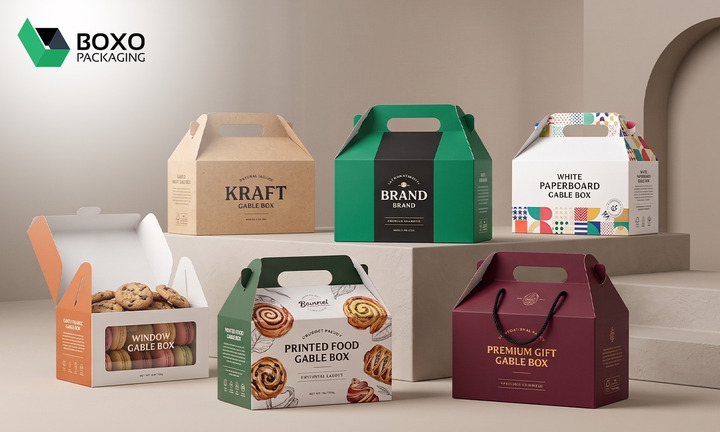
Most purchase decisions don't happen online at all, they happen standing in front of a shelf or counter. Display gable packaging is built for exactly that moment, combining a carry friendly handle with a shape that's meant to be seen and picked up, not just carried out the door.
Why Does Display Gable Packaging Perform So Well at the Point of Sale?
Display gable packaging works because it does two jobs at once, it holds the product securely and presents it attractively while sitting on a counter or shelf waiting to be picked up.
That in store moment matters more than most brands assume. Roughly 76% of purchasing decisions are made inside retail stores, according to point of purchase display research compiled by GlobalMarketStatistics, which means display gable packaging sitting at a counter or checkout area is doing real marketing work, not just holding a product until it's bought.
A supplier like Boxo Packaging typically encourages retail clients to think about how their packaging performs sitting still on a shelf, not only when it's being carried out the door. Here's what tends to make display gable packaging worth the investment.
- A built in handle that removes the need for a separate carrier bag
- A shape and fold that stands upright cleanly on a counter or shelf
- Print space that doubles as in store advertising while the product waits to be purchased
- A lightweight structure that keeps shipping and storage costs manageable for retailers
Do Materials Used in Display Packaging Affect How It Performs at Retail?
Material choice shapes both durability and cost for display packaging, and one category has become the clear standard across the point of purchase industry.
Paper, paperboard, and corrugated materials hold roughly 62% share of the point of purchase display packaging market, according to Towards Packaging. That dominance reinforces why most display gable packaging relies on the same paperboard base used across other retail carton formats, rather than plastic or composite alternatives.
Display Gable Packaging and Purchase Decision Influence
Design still plays a measurable role in whether a customer decides to buy, especially when a product is competing with several similar items nearby.
Packaging design influences purchase decisions for 72% of consumers, according to a 2025 Dotcom Distribution study, which explains why so many retail and food service brands treat their display gable packaging as seriously as their in-store signage or shelf placement.
Display Gable Packaging in Food Service Settings
Food service remains one of the heaviest users of gable style packaging, mainly because the handle solves a genuine handoff problem at a busy counter.
The global food service packaging market is projected to grow from $139.75 billion in 2026 to $171.06 billion by 2031, at a 4.13% compound annual rate, according to Mordor Intelligence, and display gable packaging sits inside that growth as a practical, branding friendly option for bakeries and quick service counters.
Display Gable Packaging and the Unboxing Effect
Unboxing has become part of the marketing conversation even for products picked up in person, not just shipped ones.
Roughly 40% of consumers share their unboxing experience on social media, according to Dotcom Distribution, meaning a well designed piece of display gable packaging can generate visibility a plain paper bag or generic box simply never will.
Point of sale packaging solves a visibility problem, but plenty of businesses have a completely different kind of paperwork problem to solve. Carbonless forms handle that side of operations, creating duplicate copies of documents without a separate carbon sheet.
What Are Carbonless Forms Actually Used For?
Carbonless forms, often called NCR forms, produce duplicate copies of a written page through a chemical coating rather than a physical carbon sheet inserted between pages.
The format has stayed relevant despite widespread digital record keeping because certain industries still require a signed physical copy for compliance or dispute resolution. Carbonless forms remain standard in invoicing, delivery receipts, work orders, and regulated financial or medical documentation.
How Big Is the Market for Carbonless Forms Today?
Demand for carbonless documentation has held remarkably steady given how much paperwork has shifted online over the past decade.
The global carbonless papers market was valued at roughly $1.82 billion in previous year and is projected to reach $2.17 billion by 2032, growing at a 2.8% compound annual rate, according to 24chemicalresearch. That slower but consistent growth shows carbonless forms aren't disappearing, just settling into a smaller but steady role in daily business operations.
Carbonless Forms and Business Invoicing
Invoicing remains one of the most common uses for carbonless
documentation, particularly among businesses that deal with vendors or clients who still expect a physical paper trail.
NCR paper served as the preferred medium for roughly 52% of business to business invoices in 2024, according to market research from MarketGrowthReports, showing that carbonless forms still handle a meaningful share of commercial paperwork despite widespread digital invoicing tools.
Carbonless Forms by Ply Count and Format
Format choice affects both cost and usability, and one configuration has become the default for general business use.
The two part NCR paper segment held roughly 34.3% of the carbonless paper market by paper type in 2024, according to Future Market Insights, making it the standard choice for receipts, work orders, and simple carbonless forms that only need a single duplicate copy.
Carbonless Forms in Regulated Documentation
Regulated sectors continue to favor carbonless documentation specifically because physical paper trails are still treated as more tamper resistant than digital logs under certain compliance standards.
Roughly 29% of banks and financial institutions continue to rely on NCR paper for secure, tamper evident documentation, according to MarketGrowthReports research, keeping carbonless forms in steady use across sectors where digital records alone aren't considered sufficient.
Both categories work by solving a problem at the exact moment it matters most. Display gable packaging earns its keep in the seconds a customer stands in front of a shelf deciding what to buy, while carbonless forms earn theirs in the paperwork trail that keeps a business accountable after the sale. A supplier like Boxo Packaging can usually help a business figure out where each one fits into their day to day operations.