Categories
Tags
- #How to Manage Multiple Revisions Efficiently Dissertation Writing
- #Essay Writing for Science Majors A Guide
- #Homework Writing Motivationa Tricks to Stay on Track
- #Using Goal Setting for Successful Coursework Writing
- #Academic Writing That Engages with Counterarguments
- #MATLAB Writing for MRI and CT Scan Processing
- #Logistics Management Dissertation Topic Ideas Guide
- #Writing CIPD Assignments on Gender Diversity in Leadership Roles
- #Write a Law Essay
- #Academic Guide
- #Law Essay
Archives
MATLAB Writing for MRI and CT Scan Processing
Posted by Taylor Harris Jun 12
Filed in Business 77 views
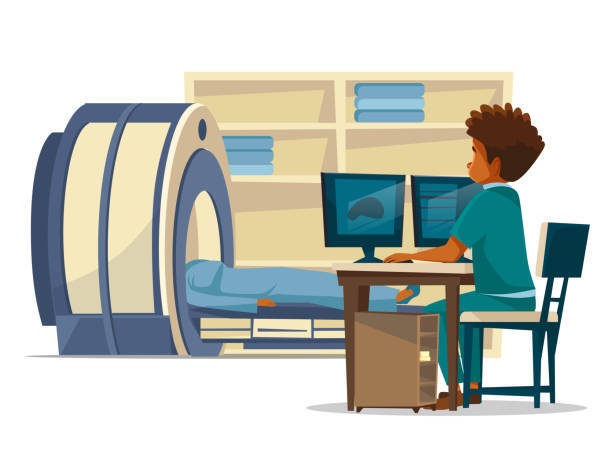
Introduction to MATLAB in Medical Imaging
Modern healthcare increasingly relies on advanced computational tools to interpret complex medical data, and one of the most widely used platforms in this field is MATLAB. When it comes to MRI and CT scan processing, MATLAB provides a powerful environment for image reconstruction, enhancement, and quantitative analysis. Its ability to handle large datasets, apply mathematical modeling, and visualize medical images makes it an essential tool for researchers, radiologists, and biomedical engineers.
MRI and CT imaging generate highly detailed scans that require sophisticated processing to extract meaningful diagnostic insights. MRI focuses on soft tissue contrast using magnetic fields, while CT scans rely on X-ray attenuation to produce cross-sectional images of the body. Both modalities produce raw data that must be processed before clinicians can interpret them effectively. This is where MATLAB plays a critical role by offering flexible algorithms and toolkits designed for medical imaging workflows.
From academic research to hospital-based diagnostic systems, MATLAB bridges the gap between raw imaging data and clinically useful information. Its programming environment allows users to customize image processing pipelines tailored to specific medical needs, ensuring both precision and adaptability.
MRI and CT Scan Processing Fundamentals in MATLAB
At the core of medical imaging workflows is the transformation of raw scan data into interpretable visuals. MATLAB supports this transformation through matrix-based computations, which naturally align with how MRI and CT data are structured. Each image is represented as a matrix of intensity values, enabling efficient manipulation and analysis.
In MRI processing, MATLAB is commonly used for tasks such as noise reduction, k-space transformation, and contrast enhancement. These steps are essential because MRI data is often affected by signal interference and requires reconstruction techniques to produce clear anatomical images. CT scan processing, on the other hand, often focuses on filtering techniques, edge detection, and tissue density segmentation to highlight bones, organs, and abnormalities.
One of the strengths of MATLAB lies in its ability to simulate and test imaging algorithms before they are applied in clinical environments. Researchers can experiment with reconstruction techniques such as filtered back projection or iterative reconstruction to improve image clarity and reduce radiation exposure in CT imaging systems. This flexibility makes MATLAB an indispensable tool in both research and applied medical engineering.
In addition to image reconstruction, MATLAB also supports statistical analysis of imaging data, allowing researchers to compare scan results across patient groups or evaluate the effectiveness of diagnostic methods. This combination of computational power and visualization tools makes it easier to translate complex imaging data into actionable medical insights.
At this stage of medical image processing theory and application, understanding computational modeling can also intersect with other technical domains, and readers exploring quantitative modeling concepts may find additional value in resources such as derivatives pricing options help.
MATLAB Techniques for Medical Image Enhancement and Reconstruction
Image enhancement is a critical step in improving the diagnostic quality of MRI and CT scans. Using MATLAB, professionals can apply a wide range of filtering and transformation techniques that refine image clarity and reduce noise. These techniques are particularly important in clinical environments where even minor visual distortions can affect diagnostic accuracy.
In MRI processing, MATLAB enables advanced signal correction methods that compensate for motion artifacts and field inhomogeneities. These corrections ensure that soft tissue structures are represented with high fidelity, which is crucial for identifying neurological or musculoskeletal conditions. In CT imaging, MATLAB supports the enhancement of contrast levels, allowing for clearer differentiation between dense and soft tissues.
Reconstruction techniques are another area where MATLAB demonstrates significant value. Medical imaging data is often captured in raw or semi-processed forms, requiring computational reconstruction to generate usable images. MATLAB provides numerical solvers and Fourier transform capabilities that allow for efficient reconstruction of cross-sectional images, improving both speed and accuracy in diagnostic workflows.
Furthermore, MATLAB supports machine-assisted segmentation, which separates anatomical structures for deeper analysis. This is especially useful in identifying tumors, lesions, or vascular abnormalities. By combining mathematical modeling with visualization tools, researchers can build highly detailed representations of internal body structures.
The adaptability of MATLAB also allows integration with external imaging systems and DICOM file formats, ensuring compatibility with hospital imaging infrastructure. This makes it a practical choice for both experimental research and real-world clinical deployment
Clinical Applications and Research Workflows
The use of MATLAB in clinical research extends far beyond basic image processing. In modern medical research environments, MATLAB serves as a central platform for developing diagnostic algorithms, testing imaging hypotheses, and validating clinical models. Its scripting flexibility allows researchers to automate repetitive tasks and build reproducible workflows.
In hospitals and diagnostic centers, MATLAB-based systems are often used to assist radiologists in interpreting MRI and CT scans. These systems can highlight areas of interest, measure anatomical structures, and even support early detection of abnormalities. While final diagnosis always remains in the hands of medical professionals, MATLAB enhances decision-making by providing precise quantitative data.
Academic researchers also rely on MATLAB to develop novel imaging techniques. For example, studies in brain imaging often use MATLAB to analyze functional MRI data, mapping neural activity patterns across different regions of the brain. Similarly, oncology research uses CT scan analysis to track tumor progression and evaluate treatment response over time.
Another significant advantage of MATLAB in research is its ability to integrate with statistical and machine learning toolboxes. This allows researchers to develop predictive models that can identify disease patterns or classify imaging data based on learned features. Such capabilities are increasingly important in the era of data-driven healthcare.
The Future of MATLAB in AI-Driven Medical Imaging
As medical imaging continues to evolve, MATLAB is expected to play an even greater role in integrating artificial intelligence with diagnostic workflows. AI-driven MRI and CT scan analysis is rapidly becoming a standard in advanced healthcare systems, where algorithms assist in detecting anomalies faster and with greater accuracy.
Future developments are likely to focus on deep learning integration, where MATLAB-based models can automatically learn from large datasets of medical images. This will improve early diagnosis, reduce human error, and support personalized treatment planning. Cloud-based MATLAB environments will also enable collaborative research across institutions, accelerating innovation in medical imaging.
Another emerging trend is real-time imaging analysis, where MATLAB processes MRI and CT data as it is being captured. This could significantly improve surgical planning and interventional procedures by providing immediate visual feedback to clinicians.
Despite these advancements, the importance of human expertise remains central. MATLAB serves as a tool that enhances medical decision-making rather than replacing it. Its continued development ensures that it remains a cornerstone technology in biomedical engineering and medical image processing research.
Conclusion
The role of MATLAB in MRI and CT scan processing is both foundational and transformative. By enabling precise image reconstruction, enhancement, and analysis, MATLAB supports a wide range of medical and research applications. Its flexibility, computational strength, and integration capabilities make it an essential platform in modern medical imaging.
As healthcare continues to advance toward AI-driven diagnostics and personalized medicine, MATLAB’s role will only expand further. For researchers, clinicians, and engineers alike, mastering MATLAB-based imaging workflows is becoming increasingly important for staying at the forefront of medical innovation.