Why Packaging Matters for Delicate Macarons During Shipping
Posted by mary donna
Filed in Business 39 views
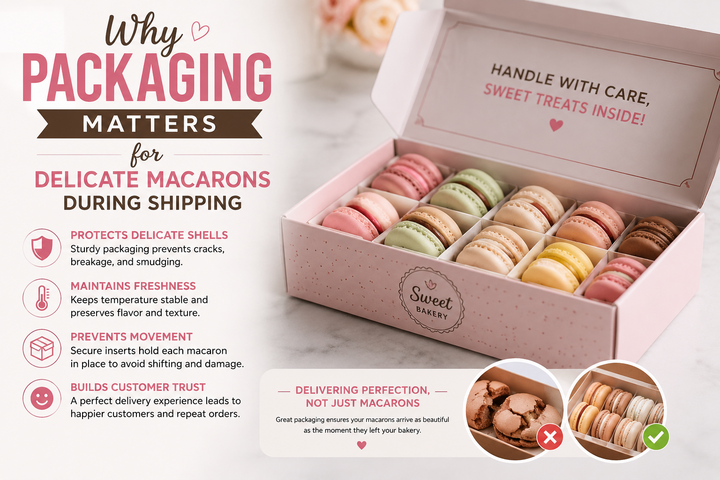
Shipping food is never as simple as shipping any other product, and macarons make the challenge even harder. Their thin, meringue-based shells are light, brittle, and easily damaged by pressure, movement, or temperature shifts. A macaron that looks flawless when it leaves the bakery can arrive at a customer's door cracked, chipped, or stuck to the inside of its packaging if it wasn't shipped correctly. For bakeries selling online or fulfilling delivery orders, packaging isn't just a presentation detail — it's the difference between a five-star review and a refund request.
Macarons Are Uniquely Fragile Cargo
Most baked goods can tolerate some jostling in transit. Cookies survive a bumpy ride. Muffins hold their shape. Macarons are a different story. Their shells are formed from whipped egg whites and almond flour, baked into a structure that's intentionally light and crisp on the outside while staying soft in the center. That same delicate structure that makes macarons so appealing to eat also makes them extremely vulnerable to pressure and impact.
Add in the filling — usually a buttercream, ganache, or fruit-based center — and the risks multiply. Fillings can shift or melt if a box isn't properly ventilated or if the product is exposed to heat during transit. A macaron that gets even slightly squeezed can crack along its shell or lose its signature "foot," the ruffled edge at the base that signals a well-made macaron. None of this is forgiving for a bakery's reputation, especially when the product is being shipped sight-unseen and the first quality check happens in the customer's own kitchen.
What Happens When Packaging Fails
The consequences of poor packaging go beyond a single bad batch. When a customer orders macarons online, they're already taking a leap of faith — trusting that a delicate, handmade product will survive shipping intact. If it doesn't, the damage isn't limited to the box; it affects trust in the brand itself.
A crushed shipment often leads to refund requests, negative reviews, and lost repeat business, all of which are avoidable with the right packaging choices. For a product that's frequently purchased for weddings, birthdays, or corporate gifting, the stakes are even higher. A damaged order doesn't just disappoint a customer — it can ruin an event they were counting on the product for. Bakeries that ship regularly quickly learn that packaging failures are far more costly than the extra investment it takes to prevent them.
Structural Protection Starts with the Right Materials
Reliable shipping packaging begins with sturdy, food-grade materials that can withstand handling by multiple carriers before reaching a customer's door. Cardboard stock, rigid board, or reinforced kraft paper all offer more structural integrity than flimsy, generic containers. The goal is a box that holds its shape under stacking, pressure, and the occasional rough handling that's inevitable in any shipping network.
Beyond the outer box, internal structure matters just as much. Custom-fitted inserts or trays keep each macaron in its own compartment, preventing pieces from sliding into one another during transit. This single feature does more to prevent breakage than almost any other packaging decision, since most in-transit damage comes from movement inside the box rather than the box itself being crushed. A snug insert essentially removes the room a macaron would otherwise have to shift, tip, or collide with its neighbors.
Sizing the Box to the Order
One of the most overlooked shipping mistakes is using a box that's too large for the order inside it. Extra empty space gives products room to move, and movement is the primary cause of shipping damage for fragile baked goods. Packaging sized specifically to the macaron count — whether that's a box of six, twelve, or twenty-four — keeps everything snug and stable throughout transit.
This is where working with a supplier that offers a range of box sizes and insert options becomes valuable. Bakeries fulfilling both small individual orders and large catering shipments need packaging that can scale accordingly, rather than forcing every order into a one-size-fits-all container. Options like custom macaron boxes allow bakeries to match box dimensions and insert layouts precisely to their product lineup, which significantly reduces the risk of in-transit shifting.
Temperature and Environmental Considerations
Shipping macarons also means accounting for factors beyond physical impact. Heat and humidity can soften shells, melt fillings, or cause condensation inside a sealed box, all of which affect texture and appearance by the time the product arrives. While packaging alone can't control weather conditions, well-ventilated, food-safe materials help regulate moisture better than plastic or non-breathable alternatives. Bakeries shipping during warmer months often pair sturdy packaging with insulated liners or cold packs to protect against temperature swings, particularly for longer shipping routes.
Branding Still Matters, Even for Shipped Orders
Protection is the priority for shipped macarons, but that doesn't mean branding takes a back seat. A well-designed box that survives shipping intact is also the first physical brand touchpoint a customer experiences when the package arrives. Suppliers such as Custom Cardboard Boxes combine logo printing, brand colors, and finishing details to turn a purely functional shipping box into a presentation moment, reinforcing the same premium feel a customer would get picking up the product in person. Getting both the protective structure and the branding right in a single box means bakeries don't have to choose between safety and presentation.
Packaging as a Shipping Investment, Not an Afterthought
For bakeries that ship macarons regularly, packaging deserves the same level of attention as the recipe itself. A product this delicate simply doesn't survive generic, one-size-fits-all boxes designed for sturdier goods. Investing in properly sized, well-structured, food-safe packaging with secure inserts protects both the product and the bakery's reputation with every order that goes out the door.
Getting shipping packaging right isn't about adding unnecessary cost — it's about preventing the far greater cost of damaged orders, refunds, and lost customers. For bakeries ready to reduce shipping damage while keeping their presentation intact, working with a packaging partner that understands the specific fragility of macarons makes that balance far easier to achieve.